
Continuous Proof Trust
The industry has spent decades trying to protect credentials. Continuous Proof Trust™ starts from a different assumption: trust should be proven in the moment, not stored for later.
What Continuous Proof Trust™ Is
Every connected system eventually has to answer the same question: Should this machine, service, gateway, sensor, agent, workload, or application be trusted right now?
Traditional authentication usually answers that question by relying on stored credentials. A system presents a password, certificate, key, token, shared secret, or machine identity artifact. If the artifact is valid, trust is granted.
That model was practical. It was portable. It also created the weakness that attackers now exploit. If trust is represented by something that can be stored, it can be stolen. If it can be copied, it can be replayed. If it remains valid after authentication, it can be misused even after the original trust decision is over.
Continuous Proof Trust™ changes the assumption. Trust is not inherited from a stored credential or assumed because something is inside a network, connected through a tunnel, or holding a certificate. Trust is proven in context, between the participants who are actually communicating, and refreshed as the relationship continues.

Trust Shouldn’t Be Inherited
The Problem with Inherited Trust
Every connected system has to decide what it will trust next. That decision should belong to the moment in front of it. Instead, much of modern security still relies on trust that carries over from earlier events.
A credential was issued. A certificate was accepted. A token was granted. A session was opened. A device was enrolled. From that point on, the system often behaves as if the original proof still says enough about the current interaction.
That is inherited trust. It is not always obvious because it hides inside normal architecture. The system is not necessarily broken. The credential may be valid. The certificate may be current. The tunnel may be encrypted. The device may have passed its earlier check. The problem is that yesterday's proof is being allowed to answer today's question. Worse yet, the proof from 364 days ago is still in use today.
In a slower world, that was a reasonable compromise. In a connected, automated, machine-speed environment, it becomes a structural risk and a significant vulnerability.
CNSA 2.0 Is Quietly Exposing the Real Problem with Machine Trust
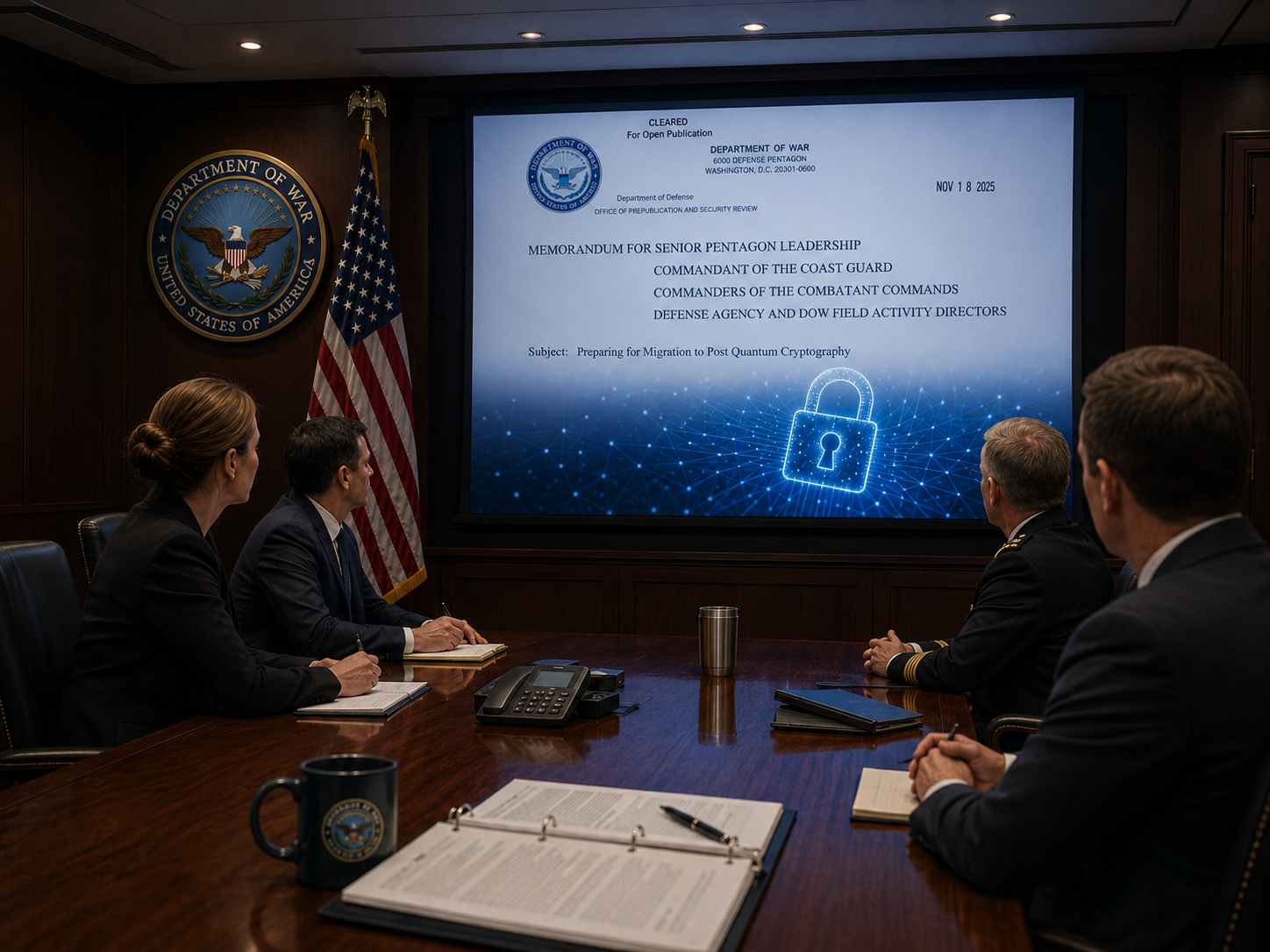
CNSA 2.0 is often discussed as a cryptography deadline. That is understandable. The move away from quantum-vulnerable public key algorithms is a major shift, and the new post-quantum standards matter.
But if the conversation stops at algorithms, it misses the larger issue. The post-quantum transition is forcing organizations to confront how machines establish trust in the first place.
Most systems still rely on objects that must be stored and later trusted: certificates, keys, tokens, shared secrets, static identities, and trust anchors. Those objects need to be issued, protected, rotated, revoked, audited, and eventually replaced. The larger and more distributed the environment becomes, the harder it is to defend.
CNSA 2.0 pulls on that thread. It not only asks whether the cryptography is strong enough. It asks whether the trust architecture underneath the product can survive the next era of security expectations.

Protecting Critical Infrastructure
Critical infrastructure was built to keep operating.
Water treatment plants, power generation sites, electrical substations, traffic control systems, rail networks, ports, airports, and emergency services were designed around availability, safety, reliability, and continuity. In many cases, the systems that run them were built long before today’s threat environment existed.
That creates a difficult problem. The systems society depends on most are often the hardest to change. A PLC running part of a water treatment process may be too old to support modern security software. A substation device may be under warranty, certified, or too operationally sensitive to modify. A traffic control system may rely on equipment designed to communicate within a trusted municipal network, not across today’s connected infrastructure.
Security teams know these systems need stronger protection. Operators know they cannot risk disrupting them.
The Credential Problem: Why What We're Relying On to Stay Secure Is Already Broken
Authentication is the front door to every system you own. And for most organizations, that door is held shut with a combination lock that a reasonably motivated teenager could crack. Not because the people managing it are careless. Because the underlying architecture was never built to handle what the threat landscape has become.
Passwords came first. Then multi-factor authentication arrived as the fix. Then came biometrics, certificate-based systems, smart cards, and hardware tokens. Each one was positioned as the answer. None of them actually solved the problem. They just moved it around.
Here's what's actually happening under the hood, and why it matters.

Quantum Resistant Cryptography
Quantum computing changes the security planning horizon. Cryptographic methods that are acceptable today may become exposed as quantum capability matures, particularly where systems still rely on RSA, ECC, long-term certificates, or other trust artifacts rooted in mathematical problems that quantum algorithms are expected to weaken.
For organizations building connected systems, the practical question is not whether every quantum threat exists today. It is whether the architecture being deployed now can survive the next cryptographic era. That matters for defence, industrial systems, critical infrastructure, AI ecosystems, IoT networks, and any environment where devices are expected to remain in service for years.
Iothic kin, formerly referred to as dOISP, was designed for this shift. kin uses Continuous Proof Trust to shift security away from static credentials and long-lived secrets toward live, session-specific cryptographic proofs. Its post-quantum resistance is not a single feature bolted onto an older architecture. It is a layered design choice across provisioning, authentication, payload protection, key separation, and session handling.

Securing Future Battlespaces
Modern military operations now extend across land, sea, air, space, and cyberspace. The future battlespace will be defined by contested communications, autonomous systems, distributed sensors, AI-enabled decision support, coalition interoperability, and adversaries operating at machine speed.
In this environment, security architectures based on stored credentials, certificates, static keys, centralized identity authorities, and periodic authentication events are increasingly insufficient. They create persistent targets, operational dependencies, and attack surfaces that adversaries can exploit through credential theft, spoofing, replay, compromise of key infrastructure, or disruption of central trust services.
Iothic kin introduces a different trust model. Formerly referred to as dOISP, kin is Iothic's credential-free security architecture for connected systems. It enables devices, services, sensors, gateways, platforms, and mission nodes to continuously prove their identity without relying on reusable credentials, persistent certificates, centralized certificate authorities, or externally managed key infrastructure.
Moving Beyond Passwords and MFA
Passwords were never meant to carry the security burden now placed on them. They were created for a slower world, where users logged in, systems checked a stored secret, and access was treated as something that could be granted and remembered.
That world no longer exists. Attackers now use phishing, social engineering, credential theft, automated replay, and man-in-the-middle techniques to exploit the very artifacts that most authentication systems still depend on. MFA improves the picture, but it does not remove the underlying weakness. It still depends on something a user knows, holds, receives, approves, or can be tricked into surrendering.
Iothic kin, formerly referred to as dOISP, was designed around a different assumption. The problem is not that passwords need more protection. The problem is that static credentials should not be the foundation of trust in the first place.
kin uses Continuous Proof Trust to move authentication away from passwords, MFA codes, reusable tokens, and stored secrets. Instead of asking whether a credential appears valid, kin asks whether the participants in the interaction can prove themselves cryptographically; in this session, at the moment, trust is required.
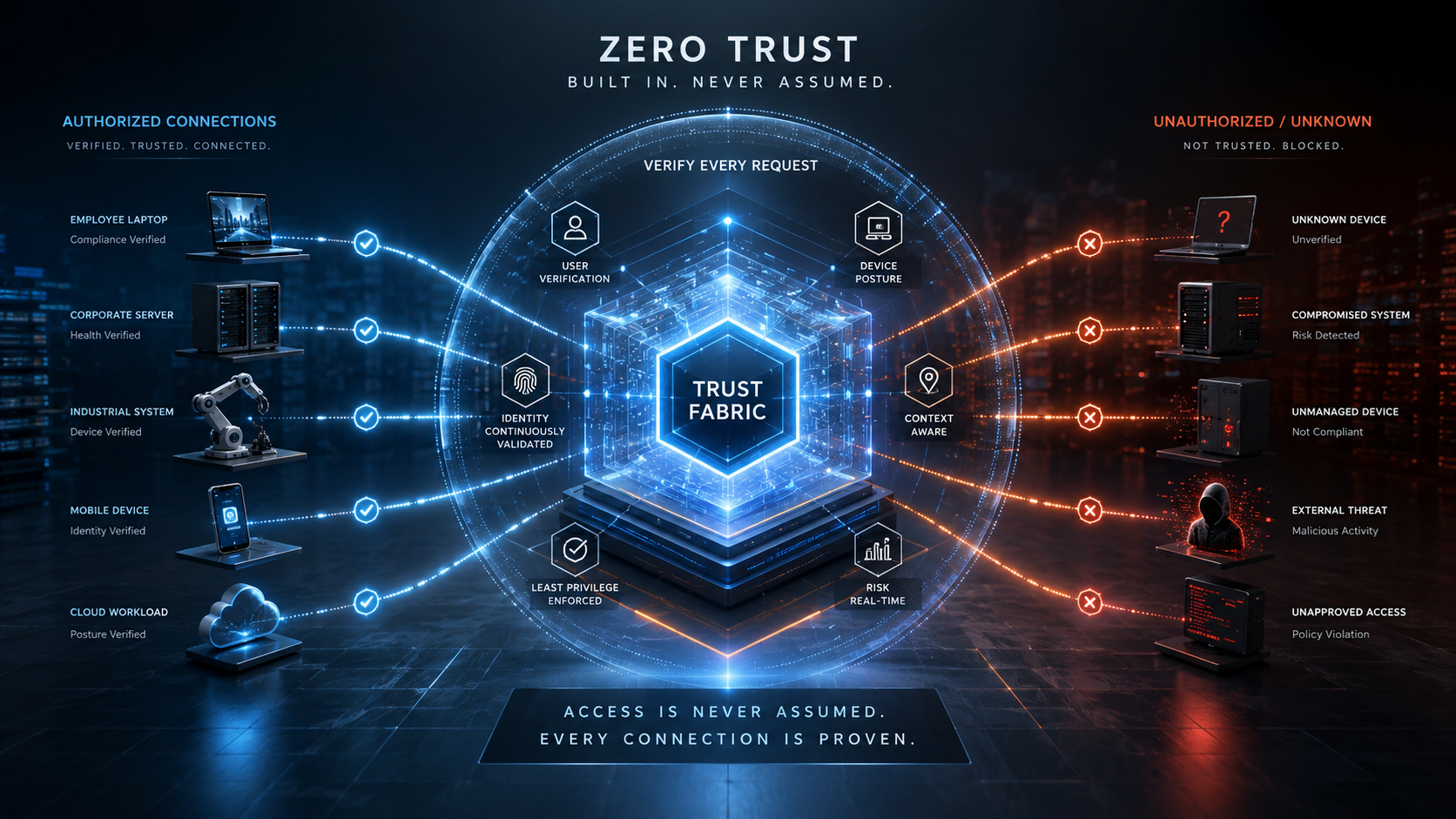
Zero Trust by Design and Default
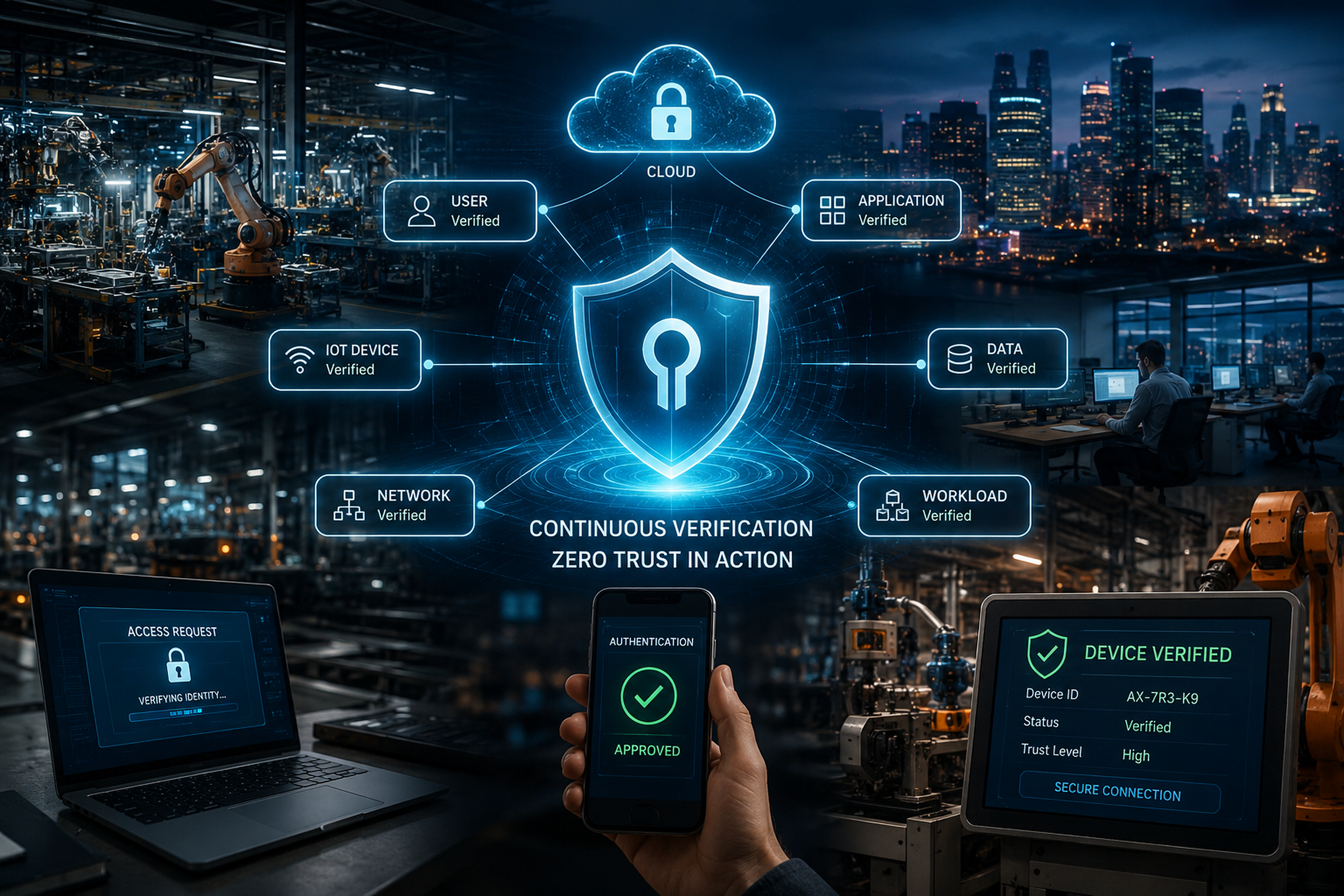
Zero Trust has become a critical strategy for protecting networks, devices, applications, and data in an increasingly complex cybersecurity environment. But in practice, many Zero Trust programs still require multiple products, extensive configuration, and layers of policy wrapped around legacy trust assumptions.
kin takes a different approach. Instead of treating Zero Trust as an added control layer, kin is built around the principle that no device, user, application, or service should be trusted by default. Every participant must prove its identity, legitimacy, and right to interact before access is granted.
This is where Continuous Proof Trust becomes central. Trust is not granted once and then assumed. It is continuously established, refreshed, and verified through cryptographic proof, session-specific protection, and ongoing validation of each participant in the interaction.

kin vs. Credential-Based Authentication
Most digital security architectures still begin with a familiar assumption: if an entity can present the right credential, it can be treated as trusted. That credential may be a password, certificate, static key, token, bearer credential, or identity assertion issued by a central authority.
This model has carried enterprise and industrial security for decades. It is familiar, widely deployed, and operationally understood. But it also creates an enduring problem. The proof of trust can be stored, copied, stolen, replayed, misused, or inherited by an attacker.
kin takes a different approach. Rather than asking whether a device, service, or system possesses a credential, kin asks whether it can continuously prove that it is the correct participant, in the correct relationship, under the correct conditions, at the time of interaction.
That is the core distinction between credential-based authentication and Continuous Proof Trust. Credential-based systems manage trust artifacts. kin executes trust continuously.